
How sub-zero cold snaps freeze and split copper pipes
Connecticut winters regularly bring arctic polar vortex blasts that drive temperatures well below zero degrees Fahrenheit, accompanied by punishing northwesterly winds. When outdoor temperatures plunge below 20°F for more than four to six consecutive hours, domestic water lines running through exterior walls, unheated crawlspaces, and basement rim joists reach the freezing threshold.
Contrary to common assumption, pipes do not burst at the exact point where ice forms. As liquid water freezes into ice, its molecular structure expands by approximately nine percent in volume. When an ice plug forms inside a pipe, it creates a hermetic seal.
As additional ice forms adjacent to the blockage, water molecules become compressed within the closed pipe section between the ice plug and the downstream closed faucet valve. Because water cannot be compressed, hydrostatic pressure skyrockets from a normal 55 PSI up to an astonishing 2,000 to 4,000 PSI. This trapped hydraulic pressure exceeds the hoop tensile strength of rigid Type L or Type M copper tubing, tearing the copper wall lengthwise along its seam.
The burst often goes unnoticed while the ice remains solid. Only when temperatures moderate and the ice plug thaws does pressurized water spray uncontrollably into finished ceilings, wall insulation, and hardwood flooring.
Identifying high-risk freeze zones in Fairfield County homes
Understanding where your home's domestic plumbing is most vulnerable allows you to take preventative action before the next cold front arrives. Common freeze danger zones across Fairfield homes include:
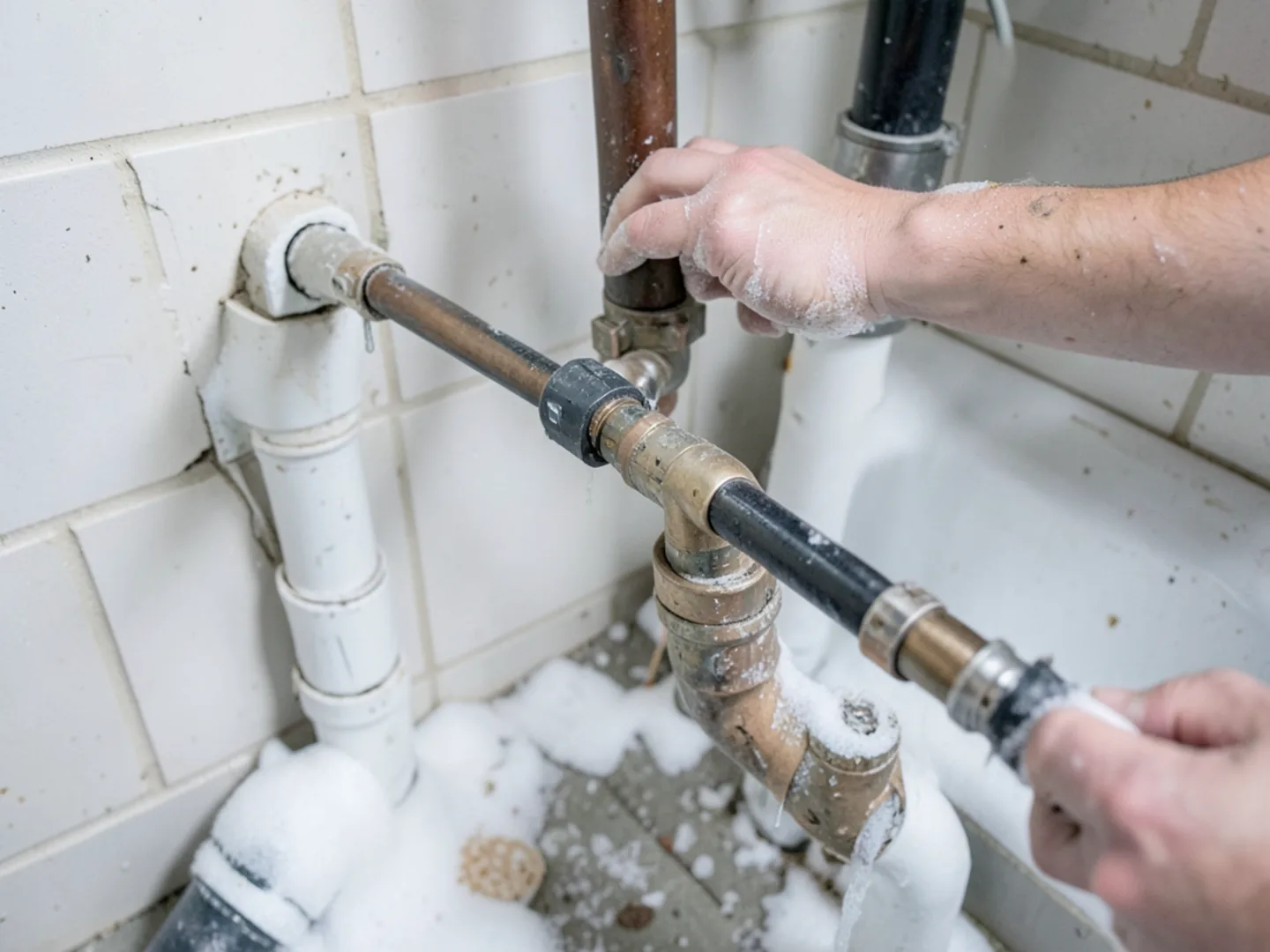
• Basement Rim Joists & Sill Plates: In older wood-frame homes, uninsulated rim joists along the perimeter of foundation walls allow freezing drafts to blow directly across domestic copper water lines.
• Cantilevered Floor Overhangs: Second-story master bathroom additions built over first-story overhangs or bay windows frequently experience frozen water lines when fiberglass batt insulation settles away from subflooring.
• Unheated Crawlspaces & Stone Foundations: Fieldstone basements in historic colonial homes lack modern thermal resistance, exposing incoming water mains and heating risers to sub-freezing air.
• Finished Rooms Above Unheated Garages: Supply lines feeding bathrooms or laundry appliances located directly above unheated two-car garages freeze when garage doors are opened during cold snaps.
• Exterior Wall Kitchen & Vanity Sinks: Cabinets located on exterior north-facing walls insulate indoor heated air from reaching water supply pipes, creating localized freezing pockets beneath countertops.
Step-by-step safe thawing protocol: what to do and what to avoid
If you turn on a faucet during a hard freeze and receive only a slow drip or no water at all, an ice blockage has formed within your pipe network. Immediate action is required to relieve internal hydraulic pressure:
1. Open the Affected Faucets: Turn on both hot and cold handles on the non-functioning fixture. Opening the valves provides a relief path for expanding water as the ice melts.
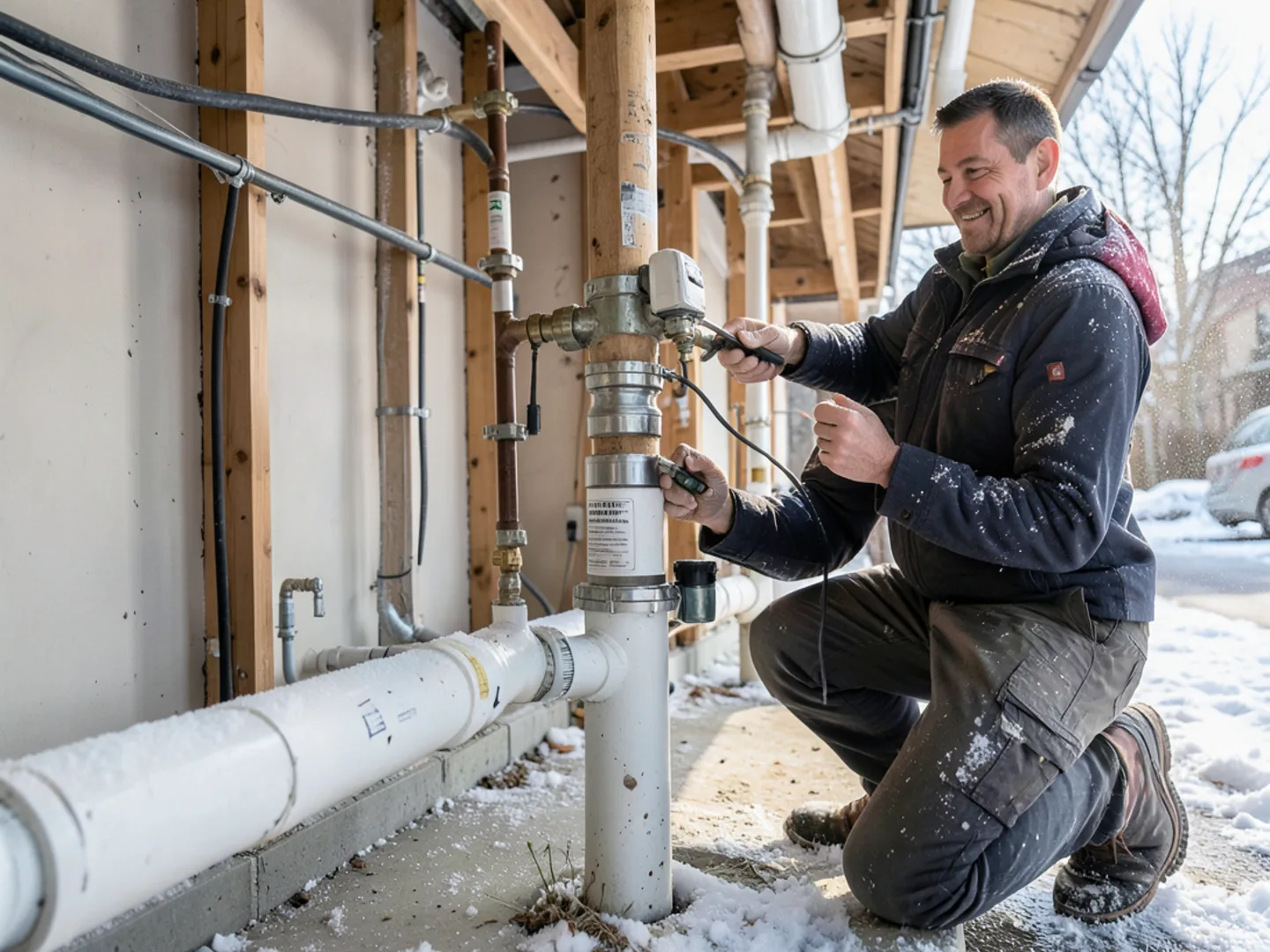
2. Trace the Supply Line: Follow the piping from the fixture back toward the basement or crawlspace to locate the frozen section. Frozen copper lines often exhibit a coating of white frost or a slight visible bulge.
3. Apply Gentle, Indirect Convective Heat: Use an electric hair dryer, a portable space heater, or towels soaked in hot water wrapped around the pipe. Begin heating at the faucet end of the frozen section and work slowly toward the blockage. Melting water must have an open exit path.
4. STRICT WARNING: Never Use an Open Flame Propane Blowtorch: Every winter, Connecticut fire departments respond to devastating house fires caused by homeowners using open propane or MAPP gas torches to thaw frozen pipes. Open flames ignite dry wood framing, paper vapor barriers, and cobwebs hidden inside closed wall cavities within seconds. Furthermore, intense concentrated flame heat can flash water into steam inside a sealed pipe, causing an explosive rupture.
5. Inspect Continuously for Weeping Seams: Keep a close watch on the pipe as it warms. If you notice droplets forming along the copper wall, shut off the water immediately.
What to do if a pipe has already split: emergency shutoff steps
If a pipe ruptures and water begins gushing into your home, fast action during the first sixty seconds prevents tens of thousands of dollars in structural damage:
• Shut Off the Main Water Valve: Rush directly to your main domestic water shutoff, typically located in the basement near the front foundation wall where the water service line enters from the street. Turn modern quarter-turn brass ball valves perpendicular to the pipe (90 degrees). For older round multi-turn gate valves, turn clockwise until tightly closed.
• De-Energize Electrical Circuits: If water is spraying near electrical breaker panels, wall outlets, or light fixtures, do not enter standing water. Shut off power to the affected area from your main electrical panel only if it can be reached safely without walking through water.
• Open Lowest Faucets to Drain the System: Open basement laundry sink faucets and outdoor hose bibs to drain residual water out of the house piping, taking pressure off the split pipe.
• Call Sherman Street Emergency Dispatch: Contact our Fairfield emergency plumbing team at (207) 419-2600. Our technicians dispatch with industrial extraction pumps, pipe-freezing repair tools, and replacement PEX-a piping.
The Connecticut homeowner winter freeze defense checklist
Before the first hard freeze of the season, Fairfield County homeowners should execute these preventative measures:
• Disconnect Outdoor Garden Hoses: Leaving a garden hose connected to an exterior spigot traps water inside the sillcock barrel. When that water freezes, it bursts the copper tube inside your basement wall. Disconnect all hoses, drain exterior lines, and close interior winter shutoff valves.
• Insulate Exposed Water Lines: Wrap exposed copper pipes in unheated basements, crawlspaces, and garage ceilings with pre-slit closed-cell polyethylene foam insulation tubes, sealing joints with heavy tape.
• Open Under-Sink Cabinet Doors: During nights when temperatures drop below 15°F, open vanity and kitchen sink cabinet doors to allow warm household air to circulate around plumbing supply lines.
• Maintain a Minimum Thermostat Setting: Never set your home thermostat below 55°F when traveling during winter months. If departing for an extended vacation, consider having a plumber drain your domestic water lines completely.
• Seal Air Leaks at Rim Joists: Inspect your basement perimeter for daylight showing through sill plates. Seal cold air gaps around cable penetrations and dryer vents using expanding polyurethane foam.
Permanent mechanical defense: Uponor PEX-a expansion piping upgrades
Homeowners who suffer chronic pipe freezing in exterior walls or unheated additions should consider modernizing vulnerable pipe sections with Uponor PEX-a (cross-linked polyethylene).
Unlike rigid copper tubing that fractures easily under frozen hydraulic expansion, PEX-a possesses thermal shape memory. Under freezing conditions, PEX-a tubing can expand up to three times its normal diameter without rupturing, contracting back to its original dimensions once thawed.
While PEX brass and polymer fittings must still be protected from extreme freezing, replacing fragile rigid copper runs with continuous PEX-a eliminates hidden wall solder joints and dramatically reduces freeze risks. Operating from 140 Sherman Street in downtown Fairfield, our licensed master plumbers provide rapid freeze repairs and long-term winterization upgrades. Call our team at (207) 419-2600.
Need immediate plumbing assistance at your home?
Call our Sherman St team at (207) 419-2600 for direct dispatch.
Frequently asked questions about burst pipes in a connecticut cold snap
Uponor PEX-a piping is flexible and can expand significantly with freezing water without rupturing, unlike rigid copper. However, repeated freeze-thaw cycles or extreme sub-zero temperatures can damage brass fittings, so insulation remains necessary.
Explore dedicated services referenced in this guide: